
Why Investment Timing Matters As Much As The Idea
A strong investment idea can attract attention very quickly. A growing sector, a promising company, a new technology, or a market that seems ready for expansion can all look convincing on paper. Yet in my experience, the idea itself is only one part of the decision.
The moment when an investor enters that idea can change the entire outcome. A good idea bought too late, at an inflated price, can create years of waiting. A solid opportunity entered with patience and discipline can produce a much better result.
This is why investment timing deserves as much attention as the investment idea itself. Timing does not mean trying to predict every market movement or chasing perfect entry points. That is not realistic.
For me, timing means understanding the relationship between value, price, market psychology, liquidity, and investor expectations. It means asking whether the opportunity is attractive now, not only whether it is attractive in theory.
Many investors focus heavily on what to buy. Fewer spend enough time thinking about when to buy, how much capital to commit, and what market conditions support the decision. This is where better investment judgment begins.
A great idea can still be a poor investment if the price already reflects all the optimism. A misunderstood idea can become attractive if the market has become too pessimistic.
How Investment Timing Affects Long Term Portfolio Performance

Long term portfolio performance is shaped by many factors, including asset selection, diversification, risk management, and patience. But the timing of capital deployment has a deep influence on the final result.
Two investors can choose the same asset and hold it for the same number of years, yet experience very different returns if their entry points are different. This is why I do not see long term investing as an excuse to ignore price.
A high quality company or asset can still be a weak investment if it is purchased at a level that already includes unrealistic expectations. The investor may eventually be right about the business, but the portfolio may not benefit as much because the entry price was too high.
Investment timing affects portfolio performance by improving the starting point. A better entry gives the investor a wider margin of safety. It allows the portfolio to absorb some volatility without immediately damaging confidence.
When capital is committed at more reasonable levels, compounding has a stronger foundation. Over a long period, small differences in entry price can create meaningful differences in total return.
This is especially true when investors reinvest gains, rebalance positions, or add capital during weaker market periods. Timing does not need to be perfect to improve performance. It simply needs to be thoughtful enough to avoid entering blindly during periods of excessive optimism.
How Investment Timing Turns Good Ideas Into Better Results
A good investment idea usually begins with a clear reason. The company may have strong earnings potential. The sector may be growing. The product may solve a real problem. The market may be undervaluing future cash flows.
However, even when the idea is good, the result depends on how and when the investor enters. I often think that a good idea becomes a better result when it is combined with patience. If the market is already excited about the same story, the price may leave little room for error.
In that case, even strong future growth may only justify the current price rather than create attractive returns. Investment timing helps turn good ideas into better results by allowing the investor to wait for a more favorable relationship between price and value.
This may happen during market corrections, temporary uncertainty, sector rotation, or periods when investors are focused on other themes. These moments can create better entry points for patient capital.
Better timing also improves the psychological side of investing. When an investor enters at a more reasonable price, it becomes easier to stay calm during volatility. The decision feels more grounded.
The investor is not relying only on hope or momentum. The position is supported by a clearer valuation case, which can make the holding period more comfortable and more disciplined.
How Investment Timing Helps Investors Avoid Poor Entry Points
Poor entry points are one of the most common reasons investors struggle with otherwise reasonable ideas. A poor entry point does not always mean the investment thesis is wrong.
It can simply mean the investor paid too much, moved too quickly, or ignored the emotional temperature of the market. When a market is crowded with optimism, prices can move far ahead of fundamentals. In those moments, investors may feel pressure to participate.
They see others making gains and fear being left behind. This pressure often leads to buying after most of the opportunity has already been priced in. Investment timing helps investors avoid poor entry points by encouraging discipline before action.
Instead of asking only whether the idea is good, the investor asks whether the current price offers enough potential return for the risk being taken. This question can prevent emotional buying and reduce the chance of entering at the peak of excitement.
Avoiding poor entry points also requires the ability to wait. Waiting is not inactivity. A patient investor continues to study the asset, follow the market, compare valuation levels, and refine the investment thesis.
When a better opportunity appears, the investor is prepared. In many cases, the best decision is not to rush into a good idea, but to let the market offer a better price.
How Investment Timing Influences Risk And Reward Decisions
Risk and reward are not fixed qualities. They change as prices change. The same asset can offer an attractive risk and reward profile at one price and a poor profile at another. This is one of the most important lessons in investing.
A good company can be risky at an expensive valuation, while a temporarily unpopular asset can offer strong upside if the market has become too negative. I believe investors should always connect risk to price.
If the price is too high, expectations must remain very strong for the investment to work. If anything disappoints, the downside can be sharp. If the price is more reasonable, the investment may have more room to handle uncertainty.
Investment timing influences risk and reward decisions by helping investors judge whether the potential return justifies the current risk. It brings discipline into the process.
Instead of reacting to headlines or market noise, the investor compares current price, expected value, downside risk, and time horizon. This approach does not remove risk. No investment method can do that. But it helps investors take risk more intelligently.
A thoughtful timing approach allows investors to be more selective, more patient, and more aware of what they are paying for. In the long run, this can improve both the quality of decisions and the stability of portfolio results.
How Investment Timing Changes Outcomes In Market Cycles
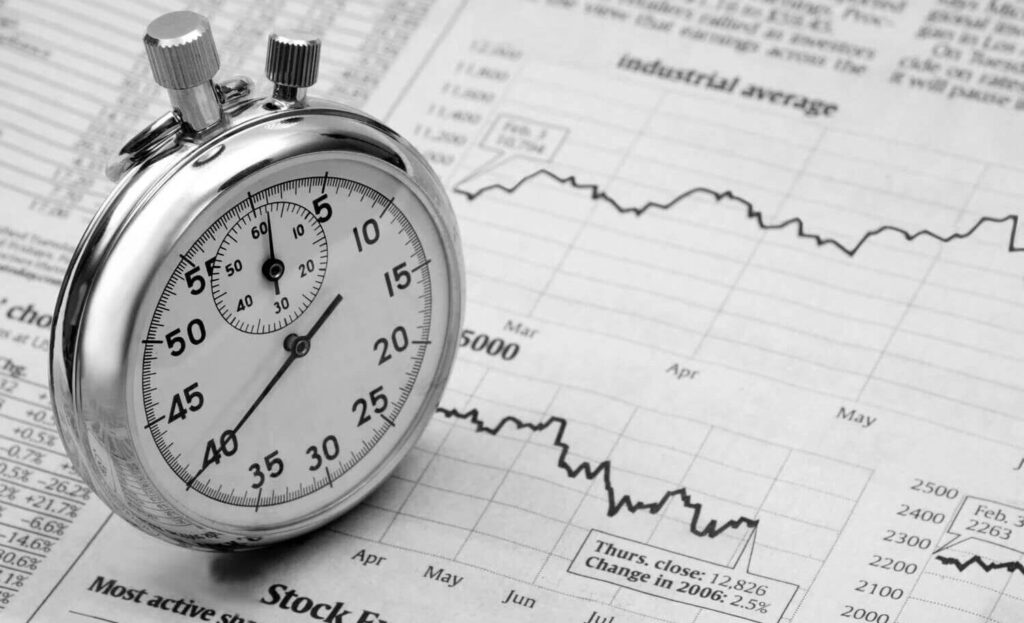
Markets move in cycles. There are periods of expansion, optimism, liquidity, and strong risk appetite. There are also periods of fear, contraction, caution, and lower valuations. These cycles influence how assets are priced and how investors behave.
Ignoring them can lead to weak decisions, even when the investment idea is fundamentally strong. During optimistic cycles, investors often accept higher valuations because they expect growth to continue.
During negative cycles, they may avoid risk even when prices become attractive. Both emotions can distort judgment. The best opportunities often appear when the market mood is uncomfortable, while the most dangerous moments can appear when confidence feels effortless.
Investment timing changes outcomes in market cycles because it helps investors recognize where they are in the broader environment. It does not require perfect forecasting.
It requires awareness. Are valuations stretched? Is liquidity supportive? Are investors too confident? Has fear become excessive? These questions help shape better timing decisions. A cycle aware investor does not need to move in and out of markets constantly.
Instead, they adjust capital allocation, position size, and expectations based on conditions. In strong markets, they may become more selective. In weak markets, they may prepare to add carefully. This flexibility can make a major difference over time.
How Investment Timing Helps Reduce Emotional Investing Mistakes
Emotional investing is one of the biggest threats to long term success. Fear can push investors to sell at the wrong time. Greed can push them to buy too late. Regret can make them chase opportunities they previously missed.
Impatience can make them abandon a strategy before it has enough time to work. I do not believe emotions can be removed from investing completely. Markets involve uncertainty, and uncertainty naturally creates emotional reactions.
But emotions can be managed through structure, preparation, and discipline. Timing is part of that structure. Investment timing helps reduce emotional investing mistakes by encouraging investors to define their decision points before emotions take over.
An investor can decide in advance what price range looks attractive, what conditions would justify adding capital, and what signals would weaken the thesis. This preparation reduces the need to make rushed decisions during volatile moments.
A disciplined timing approach also helps investors avoid chasing. When the market rises quickly, a prepared investor can step back and ask whether the opportunity still offers enough value.
When the market falls sharply, the same investor can review whether the decline has created opportunity or revealed real weakness. This process makes decision making calmer and more rational.
How Investment Timing Supports Smarter Capital Allocation
Capital allocation is one of the most important responsibilities of any investor. It is not only about choosing attractive assets. It is about deciding how much capital to commit, when to commit it, and how to balance opportunity with risk. Timing plays a major role in this process.
A portfolio can become vulnerable if capital is deployed too aggressively at the wrong moment. If the investor uses all available cash during an overheated market, there may be little flexibility left when better opportunities appear.
On the other hand, being too cautious for too long can also create missed potential. The balance is difficult, but it is essential. Investment timing supports smarter capital allocation by helping investors stage their decisions.
Instead of committing all capital at once, an investor may choose to build positions gradually. This can reduce the pressure of needing one perfect entry point and allow the portfolio to respond to changing conditions.
Smarter allocation also means knowing when not to act. Cash can be a strategic asset when valuations are unattractive or uncertainty is high. It gives the investor optionality.
In my view, the ability to wait with available capital is often underestimated. Investors who preserve flexibility can take advantage of opportunities when others are forced to react.
How Investment Timing Improves Patience And Investor Discipline
Patience is often mentioned in investing, but it is difficult to practice without a clear framework. Waiting without a plan can feel like uncertainty. Waiting with a clear timing strategy feels different. It becomes part of the investment process rather than a sign of hesitation.
A disciplined investor understands that not every good idea must be acted on immediately. Sometimes the right decision is to study, observe, and wait for conditions to improve. This requires confidence, especially when markets are moving quickly and others appear to be making easy gains.
Investment timing improves patience because it gives the investor a reason to wait. The investor is not simply delaying action. They are waiting for a better price, stronger confirmation, improved risk conditions, or a clearer market setup.
This makes patience practical rather than abstract. Discipline also improves when investors accept that they will never capture every opportunity. The goal is not to participate in every market move.
The goal is to make decisions that fit the investor’s strategy, risk tolerance, and time horizon. Timing helps protect this discipline by reducing impulse decisions and supporting more consistent behavior across market environments.
How Investment Timing Helps Identify Better Market Opportunities

Market opportunities are not always obvious. Sometimes they appear during periods of uncertainty, when most investors are focused on short term fear. Sometimes they appear in overlooked sectors, where expectations are low but fundamentals are improving.
Sometimes they come from valuation gaps created by temporary market pressure. I believe that better opportunities often require a patient eye. If an investor only follows what is popular, they may arrive late.
If they are willing to study what the market is ignoring, they may find more attractive entry points. Timing helps reveal the difference between real opportunity and temporary excitement.
Investment timing helps identify better market opportunities because it forces investors to examine context. Why is this asset priced this way now? Has the market become too optimistic or too pessimistic? Are current concerns temporary or structural? Is the expected return still attractive after considering risk?
This kind of questioning can improve opportunity selection. It helps the investor avoid buying only because something is rising. It also helps avoid rejecting an asset simply because it has fallen.
Better opportunities are often found where price, value, and sentiment have moved out of balance. Timing helps investors notice those moments before the crowd fully adjusts.
How Investment Timing Shapes More Successful Investment Decisions
Successful investment decisions are rarely built on one factor alone. They come from the combination of a strong idea, reasonable valuation, disciplined risk management, and the patience to act when conditions are favorable. Timing connects these elements.
For me, a successful investment decision begins with better questions. Is the idea strong? Is the price reasonable? Does the current market environment support the thesis? What could go wrong? Is there enough potential reward for the risk? Should capital be committed now, gradually, or later? These questions make the process more complete.
Investment timing shapes more successful investment decisions by preventing investors from treating every good idea as an immediate action. It adds judgment. It reminds the investor that markets move between fear and excitement, and that price matters even when the story is attractive.
The strongest investors are not always the ones who find the most ideas. They are often the ones who know which ideas deserve capital now and which ones should remain on the watchlist. They understand that waiting can be a decision, not a weakness.
They know that a disciplined entry can improve returns, reduce stress, and support better portfolio outcomes. A good investment idea matters. But the timing of that idea can determine whether it becomes a strong result or a long period of frustration.
That is why I see timing as one of the most practical skills an investor can develop. It does not require perfection. It requires patience, awareness, and the discipline to act when the balance between price, value, and opportunity becomes truly attractive.
See you in the next post,
Anil UZUN